Three days in Seville is the default recommendation, and it is not wrong, but it leaves the rest of Andalusia as a day trip you never take. The region is compact enough that you can sleep in three different cities in seven days without ever spending more than two hours on a train, and each of them changes the trip: Cordoba for the morning light on the Mezquita, Granada for the Alhambra and the Sacromonte caves, Cadiz for the wind and the fried fish at the end.
I have run this route four times now, twice in spring and twice in autumn, and the version below is the one I would book for a first visit. It assumes you arrive by air or high-speed rail and that you want cities rather than beach days, with enough slack left to sit down for a long lunch.
Getting between the three cities
The skeleton is one long transfer and two short ones. From Madrid, the AVE to Cordoba takes about an hour and forty minutes; from Seville it is forty-five minutes. Cordoba to Granada is the awkward leg: there is no direct fast train, so the realistic options are a bus from Cordoba bus station (roughly two and a half hours) or a train with a change in Bobadilla (three hours or more). Granada to Cadiz is a single bus, just under four hours, and Cadiz back to Seville is about an hour and a half by train.
- Day 1: arrive Cordoba, afternoon in the old town.
- Day 2: morning Cordoba, midday bus to Granada, evening in the Albaicin.
- Days 3 and 4: Granada, with the Alhambra booked for day 3.
- Day 5: bus to Cadiz, late afternoon on La Caleta beach.
- Days 6 and 7: Cadiz, then train out to Seville or Madrid.
Buy the long legs in advance. Spanish rail fares roughly double within three weeks of departure, and the bus companies (ALSA and the regional coaches) keep a cheaper promotional fare that sells out on Fridays.
When to go and what that changes
March to May and October are the sweet spot: the days sit around 20 to 25 degrees, the queues are half the summer size, and the light in the evening lasts past nine. July and August push past 40 degrees in inland Cordoba and Granada, which turns the middle of the day into a planning constraint rather than a preference; you move early, eat late and keep the afternoons indoors. Winter is genuinely usable, with grey mornings and full afternoons, and it is the only season where you can walk the Alhambra grounds at noon without queuing for shade.
Two dates matter if you are fixed on a window: Semana Santa and the Feria de Abril in Seville fill every bed in the province for a week each, and prices triple. Outside those, mid-range hotels run 70 to 110 euros a night in all three cities.
Cordoba: the half-day that earns a full one
Most people see the Mezquita from the outside, take a photo and leave. Go inside at opening time instead, when the forest of columns is still empty and the light comes through the eastern arches in flat bars. The Patio de los Naranjos is free; the Mezquita interior costs around 13 euros and is included in the combined ticket with the Alcazar de los Reyes Cristianos and the Synagogue, which is worth taking if you plan to stay the night.
The rest of the old town rewards walking rather than sightseeing: the Roman bridge at dusk, the Calleja de las Flores, the patios that locals open in May. Dinner here should be slow and local; the Jewish quarter has the highest concentration of restaurants that trade on location, so walk two streets back from the synagogue and look for a menu del dia.
Granada: the ticket, and everything around it
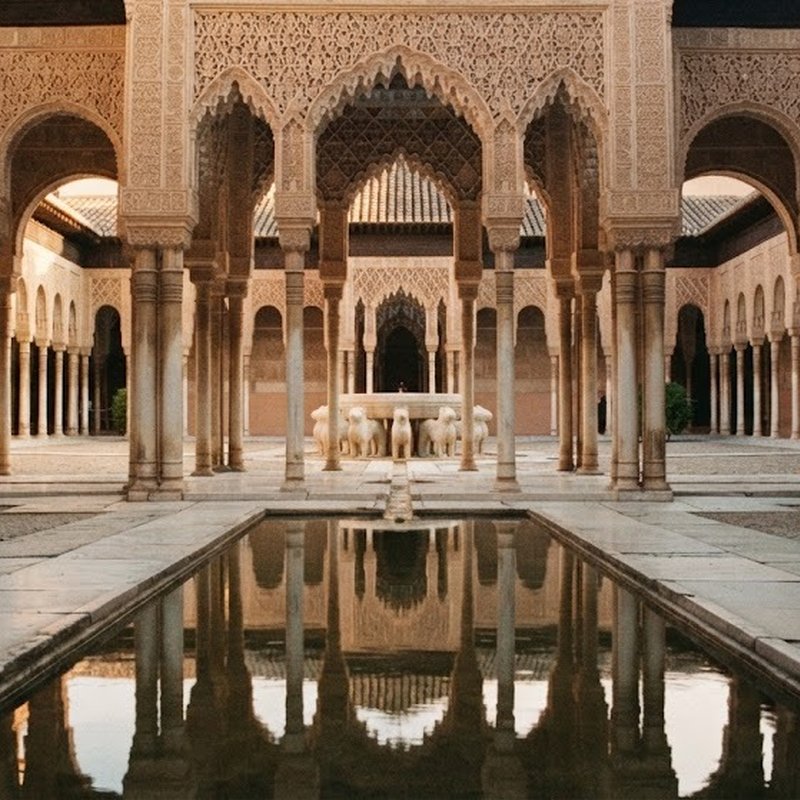
The Alhambra is the reason most people come, and it is the only piece of this trip that has to be booked weeks ahead. Buy the general daytime ticket for the Nasrid Palaces slot first, then build the day around that hour rather than the reverse. Allow three hours for the full complex: Nasrid Palaces, Alcazaba, Generalife gardens and the walk up from the city. Enter from the main gate, do the palaces at your slot, and save the Generalife for the end when the tour groups have gone.
Two full days in Granada are not too many. The Albaicin and Sacromonte take an unhurried morning and evening between them, the Cathedral and Royal Chapel are a compact hour, and the free tapas culture means dinner costs less here than anywhere else on the route: order a drink, a small plate arrives with it.
Cadiz: the Atlantic finish
Cadiz is the oldest continuously inhabited city in western Europe and it does not feel like a museum, because people still live and work in the old quarter. Start at the market in Plaza de las Flores in the morning, walk the seafront to La Caleta, and climb the Tavira tower for the view over the rooftops to the water. The cathedral is worth the entry, the Roman theatre is free, and the entire historic centre is walkable in under an hour.
Eat here at lunch, not at dinner: the fried fish stalls and the beach chiringuitos are at their best between one and three, and the kitchens slow down after the evening shift starts. Fried shrimp, cazon en adobo and a glass of manzanilla is a full meal for about 15 euros.
What I would actually book first
Three reservations decide whether the week works: the Alhambra Nasrid slot, the first night in Granada, and the Friday bus from Cordoba. Everything else can be arranged on the ground. If you only have five days, cut Cadiz and give the extra day to Granada; if you have nine, add Ronda as a stop between Seville and Cadiz instead of backtracking.